What is an MCP gateway? Compare top options and learn how OpenObserve's native MCP server plugs into your AI agent stack for live observability data access.
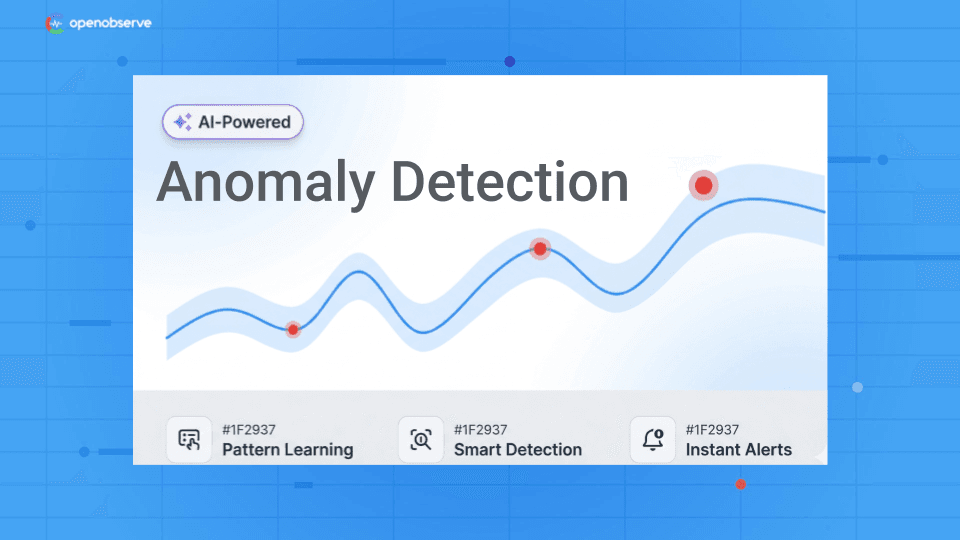
Complete guide to AI anomaly detection in observability. Discover how machine learning algorithms detect unusual patterns, handle seasonality, and catch issues traditional thresholds miss.
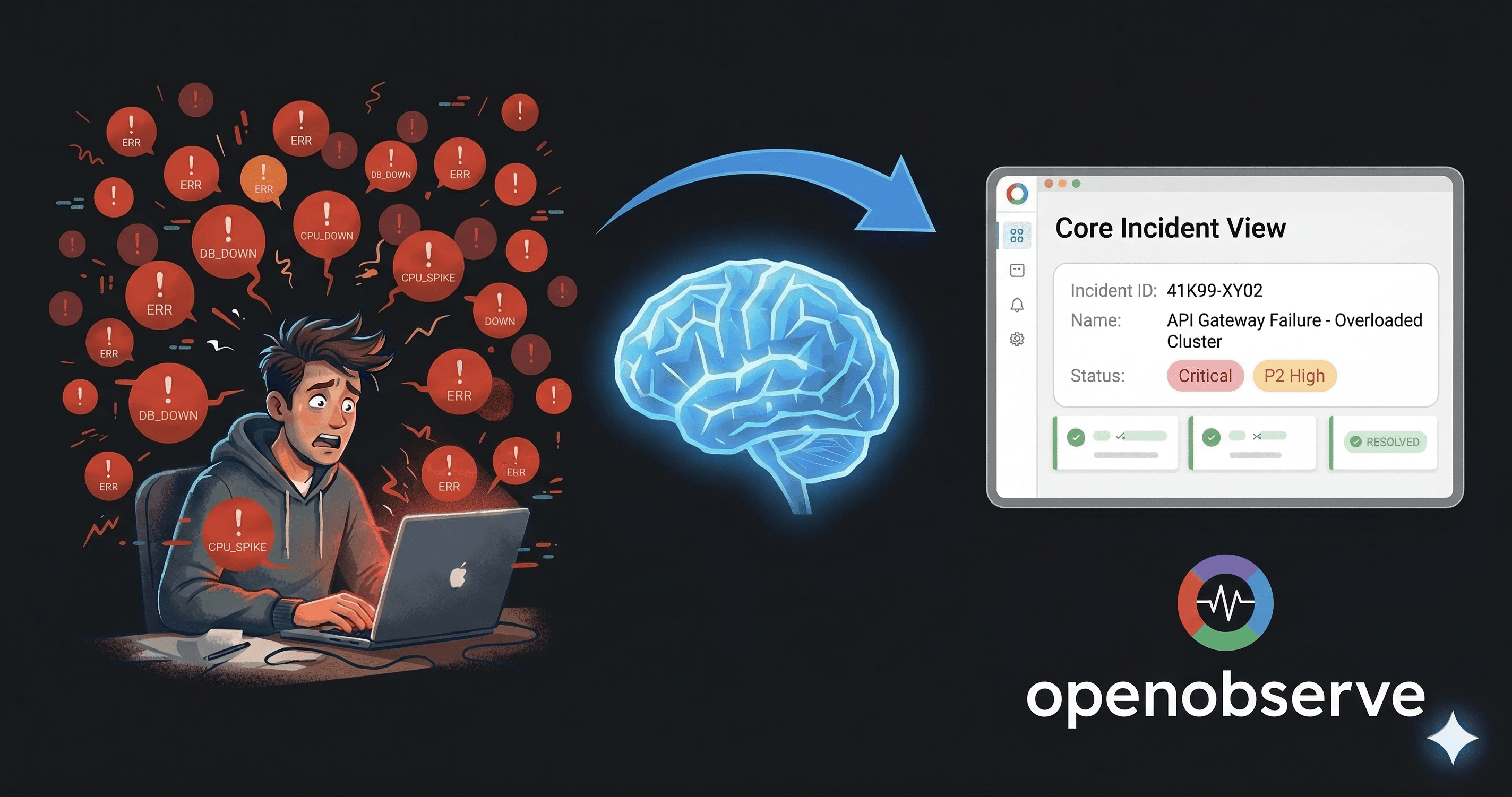
Discover how AI incident management transforms production operations by reducing MTTR by 90%, automating root cause analysis, and cutting alert noise by 80%. Learn how log clustering, trace correlation, and LLM-powered RCA work
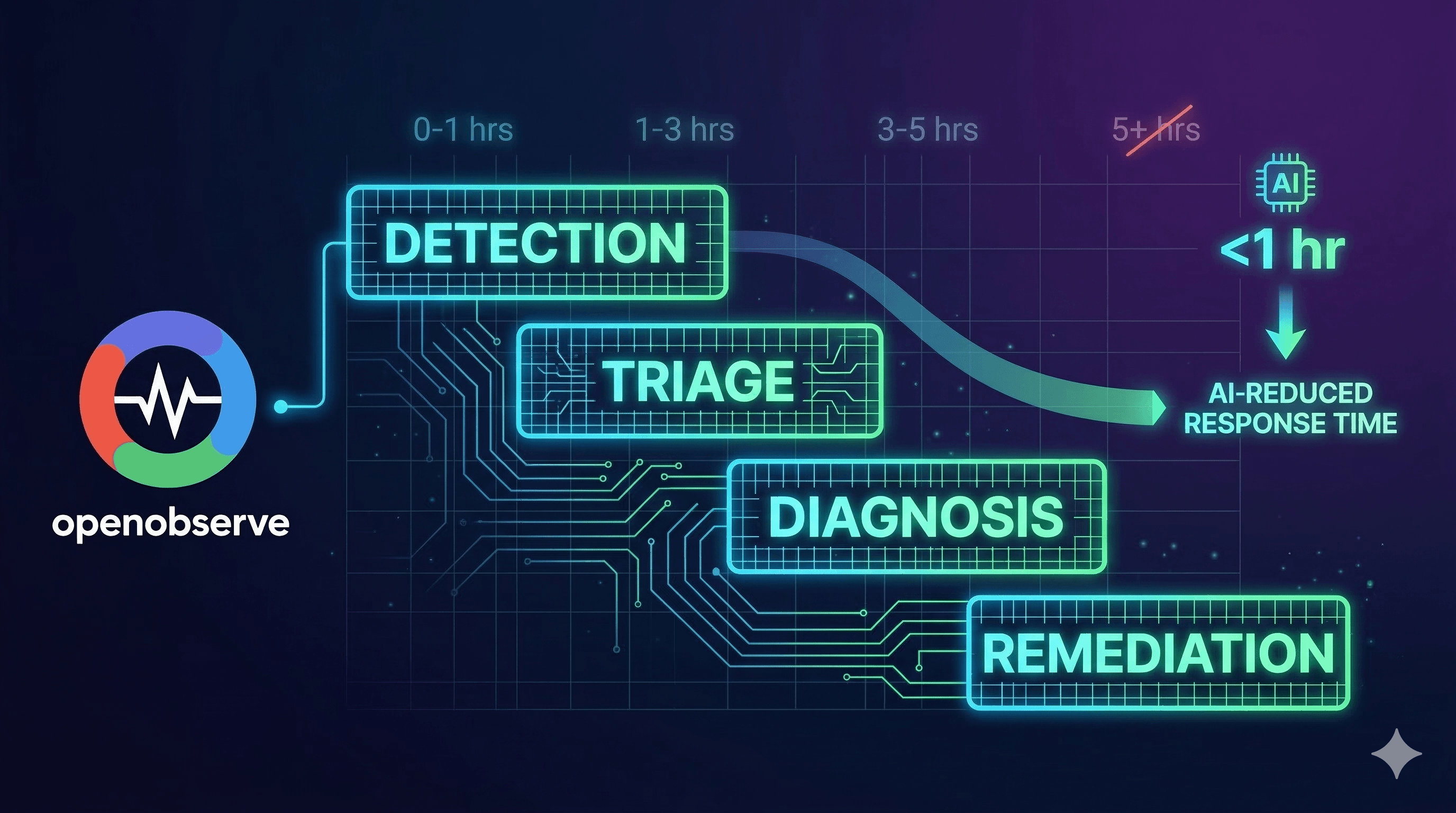
Learn how to measure and dramatically reduce Mean Time to Resolution (MTTR) using AI-powered observability. Discover the four phases that inflate MTTR and how modern teams achieve faster incident resolution with intelligent detection, triage, diagnosis, and remediation
Discover how AIOps transforms IT operations with AI-powered anomaly detection, event correlation, and automated remediation. Learn the core capabilities, use cases, and how observability data drives intelligent operations.
Why AI-assisted analysis is changing how engineering teams investigate incidents, and why OpenObserve leads the category.
AI Assistant and LLM Observability are now live on OpenObserve Cloud. v0.70.0 brings a rebuilt Service Graph, visual query builder, Incident Timeline, and more.
Lightstep sunsets March 2026. Compare 10 OpenTelemetry-native alternatives with cost data, migration guides, and real performance analysis. Find your replacement fast.
Looking for a DataDog alternative for Real User Monitoring? Compare OpenObserve vs DataDog for RUM capabilities: session replay with privacy masking, Core Web Vitals tracking (LCP, INP, CLS), error detection, and SQL-based user analytics.
Compare the top 10 AIOps platforms in 2026. AI-powered observability tools for autonomous operations, cost optimization, and intelligent incident response.
A comprehensive comparison of the top 10 observability platforms in 2026 highlighting their strengths, trade-offs, and use-cases.
Does cheaper observability mean worse capabilities? We tested this assumption by sending identical telemetry from a 16-service OpenTelemetry demo to both DataDog and OpenObserve simultaneously. The results: DataDog costs $174/day vs OpenObserve's $3/day—98% cost savings without sacrificing visibility. Evereve achieved similar results: 90% cost reduction, platform consolidation, and unlimited instrumentation after migrating from DataDog.
Open source DataDog alternative IAM: SSO, RBAC, multi-tenancy included. Action-based permissions across 28+ modules. Compare $0.30/GB vs per-host pricing.
Hands-on comparison of DataDog and OpenObserve for dashboard visualizations. DataDog's proprietary query syntax and premium tiers vs OpenObserve's SQL/PromQL queries, ECharts custom charts, and community dashboard library. Real test data shows 98% cost savings ($174/day vs $3/day) with identical dashboard capabilities and OpenTelemetry-native architecture.
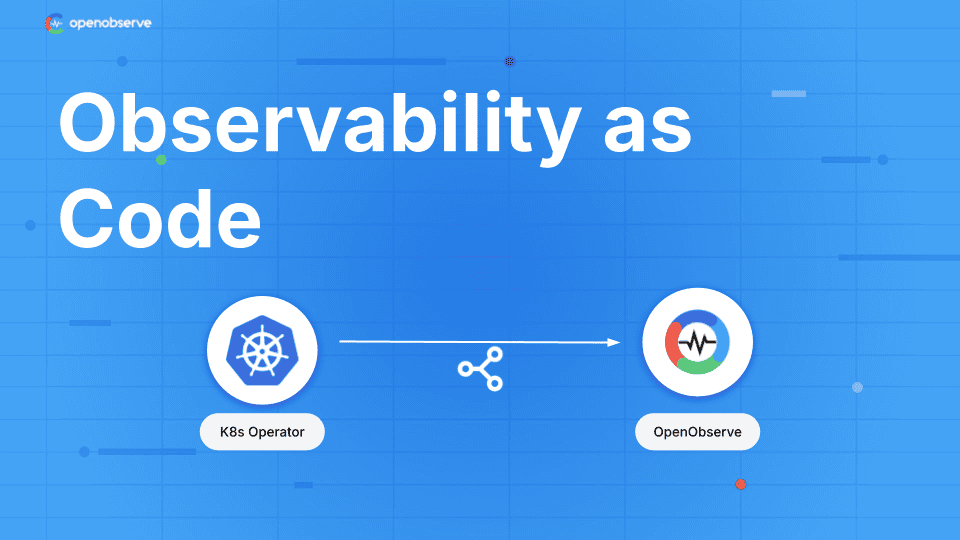
OpenObserve Kubernetes Operator brings observability as code to platform teams. Manage alerts, pipelines, and functions as Kubernetes resources with GitOps workflows.
Automatically extract patterns from millions of logs in seconds. Learn how OpenObserve's log pattern analysis helps SREs reduce incident investigation time from 30 minutes to under 5 minutes.
DataDog vs OpenObserve APM comparison: $120/day LLM charge, SQL trace dashboards, OTel native, service dependency mapping, and 60-90% cost savings with real data.
DataDog vs OpenObserve metrics comparison: PromQL support, high-cardinality handling, custom metrics auto-generation, and 60-90% cost savings with real data.
Real-world comparison of DataDog and OpenObserve for log management. SQL queries, automatic field discovery, and 90% cost savings. Tested with OpenTelemetry.
Traditional monitoring tools fail when you need them most. Learn how Rust-powered observability platforms solve memory safety issues and deliver reliable, high-performance monitoring at 60-90% and lower cost.
Learn how OpenObserve reduces Mean Time to Detect and Mean Time to Resolve through intelligent alert correlation, deduplication, and automated incident creation. Cut through alert fatigue with SLO-based prioritization and Actions automation.